Will and orbits
True Will: listening before acting
How does one recognise one's orbit? Maestro Cornelio teaches that Will is not invented but discovered, and that listening comes before action.
If "Do what you will" is the whole of the Law, the decisive question becomes: what do I truly will? Maestro Cornelio answers with a phrase the Studio often repeats: one's orbit is not invented, it is discovered. True Will is not a plan drawn up at a desk, but a direction already present within us, like a vein of water under the ground. The task is to find it.
The hidden orbit
Why is Will hidden? Because the noise of desires covers it. The Master draws the distinction carefully. Desire is a movement towards something we lack; it is often born of lack and fades once satisfied, giving way to another. Will is a movement born of fullness: it is what we are when we stop reacting. Desire says "I want this"; Will says "I am this, and that is why I go."
Not all desires are enemies of Will. Some are its traces, its signals, like footprints in the snow left by an animal one cannot see. The work is learning to tell true footprints from those left by fear or imitation.
The traces of will
The Master points to four sources through which Will speaks. The first is deep joy: not passing pleasure, but the quiet joy that accompanies the actions that are right for us, even when they are tiring. The second is constancy: what keeps returning in our life, the interests and loves that withstand time. The third is silence: what remains when the voices of others fall quiet. The fourth is the work: what we manage to do naturally and what seems to do others good as well.
None of these sources is enough on its own. Together they draw a profile; and that profile, watched over years, becomes an orbit.
Listening before acting
Hence the practical rule the Master considers fundamental: listen before acting. It does not mean postponing for ever, nor waiting for a sign from heaven. It means allowing oneself, before every important choice, a time of silence in which to ask where one's impulse comes from. Does it come from the centre, from the point the Law calls Hadit? Or from the surface, from haste, from the anxiety to please?
Pure will, free from purpose, delivered from the craving for results, is perfect in every way.
The deepest point
The Master warns that listening is not anxious introspection. It is not a matter of digging endlessly into oneself in search of faults, but of going down towards the deepest point, where questions grow quiet. There Will does not speak with arguments: it makes itself felt as a calm certainty that does not need defending. Whoever has felt it once recognises it; and from then on also recognises when they move away from it.
In the course of the day
How is listening exercised in everyday life? The Master proposes three gestures. In the morning, a minute of silence before starting, to remember one's orbit. During the day, a short pause before decisions, even small ones: do I will this or am I undergoing it? In the evening, a look back, without judgement, to notice where one has been faithful to oneself and where not. It is the same spirit as the journal the Studio recommends to those beginning the path.
An arrow that knows where to go
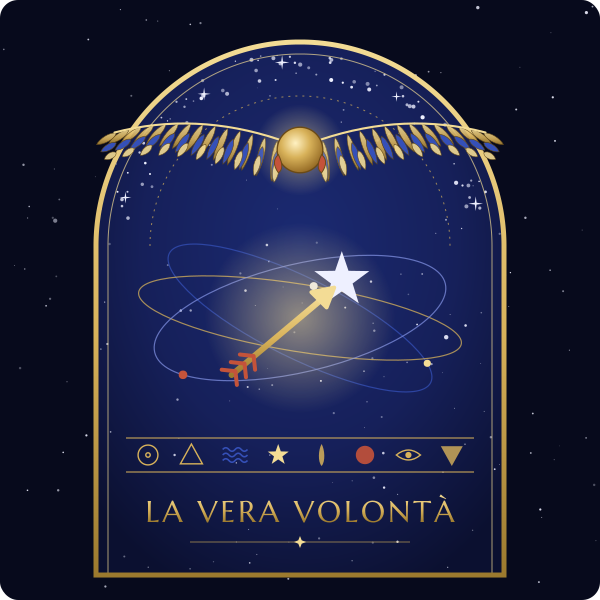
The image accompanying this entry is an arrow aimed at a star. The Master uses it to explain that Will is not brute force. An arrow flies far not because it pushes harder, but because it is straight, light and pointed in the right direction. So it is with Will: once found, it needs no effort to overcome resistance, because it does not fight against itself. That is why the Law can say, without contradiction, that whoever fulfils their Will is at once the freest and the most obedient of beings: obedient to their own nature, free from everything else.
Watch the video
Read next
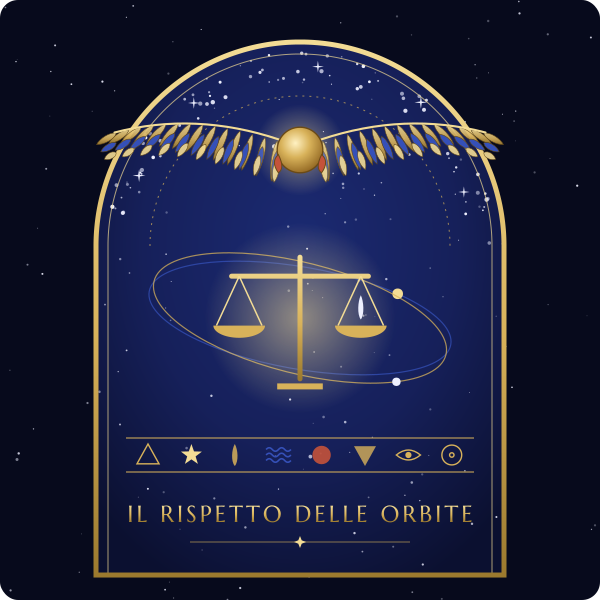
Respect for orbits: I am a star, you are a star
"I am a star, you are a star, each travels its own eternal orbit": the ethics of mutual freedom in Maestro Cornelio's teaching.
"A king is one who knows his own will": sovereignty over oneself
The saying on inner kingship: for Maestro Cornelio the true king does not rule over others, but knows his own Will and fulfils it, day after day.
"Do what you will shall be the whole of the Law": the hinge of the teaching
The shortest and most misunderstood formula of the Law, explained by Maestro Cornelio: not an invitation to whim, but the task of discovering and fulfilling one's true Will.
